The ABB TB811 3BSE008568R1 Modulebus Optical Port operates as a critical interface for communication between controllers, I/O modules, and automation systems. It is designed to transmit data efficiently over optical fibers, reducing interference and ensuring reliable signal integrity in harsh industrial environments. This port works by converting electrical signals from the controller into optical signals, which travel through fiber-optic cables to other modules or devices. By doing so, the TB811 maintains high-speed data exchange while preventing signal loss, which is common in traditional copper wiring. Industries using complex machinery, such as power plants, manufacturing facilities, and oil and gas systems, rely on this optical port to maintain continuous operation. Its compatibility with ABB Modulebus systems ensures seamless integration, enabling controllers to communicate with multiple I/O modules simultaneously without latency or error. This functionality is essential for monitoring critical processes in real-time, making the TB811 an indispensable component in advanced automation systems.
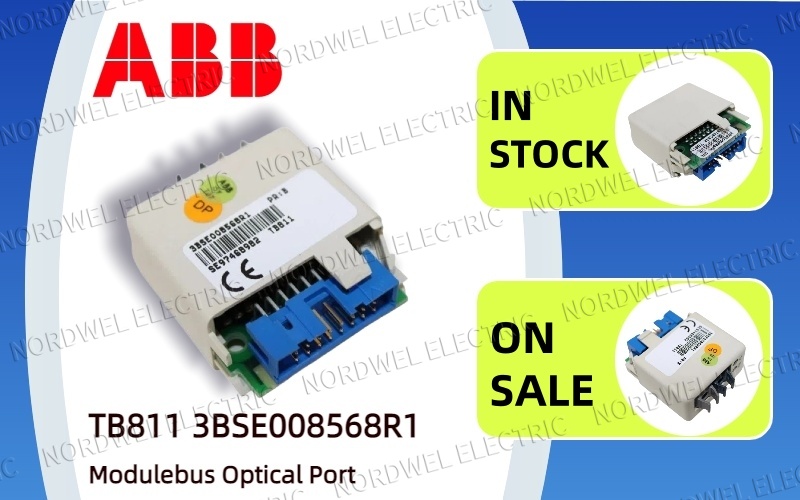
The TB811 3BSE008568R1 Optical Port improves communication reliability by leveraging fiber-optic technology to eliminate electromagnetic interference and reduce signal degradation over long distances. Unlike traditional copper-based communication lines, optical fibers are immune to electrical noise, which can disrupt signal transmission in industrial environments with heavy machinery or high-voltage equipment. This increased reliability allows operators to maintain precise control over their systems, ensuring that process data is accurately transferred between controllers and devices. ABB designed the TB811 to support high-frequency data transfers and multi-point connections, allowing for rapid updates across entire automation networks. Additionally, its modular design simplifies installation and maintenance, which reduces downtime and operational risks. By integrating the TB811 into existing ABB Modulebus systems, engineers can enhance network stability while extending the lifecycle of critical equipment. This makes it especially valuable for industries where uninterrupted communication is essential, such as chemical processing, energy generation, and manufacturing automation.
ABB ensures that the TB811 3BSE008568R1 Optical Port is fully compatible with a wide range of ABB controllers and I/O modules through strict adherence to Modulebus standards. The company’s engineering team developed the port to work seamlessly with ABB automation systems, ensuring that all connected modules can communicate without configuration errors. This compatibility reduces the need for additional converters or adapters, streamlining system design and reducing installation costs. The TB811 also supports plug-and-play integration, allowing technicians to add or replace modules without shutting down the network. ABB provides detailed technical documentation and configuration tools, enabling system integrators to quickly set up and verify connections. The optical port’s compatibility with long-distance communication and multi-node networks ensures that even large-scale industrial plants can rely on consistent data transmission across different sectors. This focus on integration and compatibility underscores ABB’s commitment to providing efficient, user-friendly solutions for industrial automation, where both precision and flexibility are key.
To maximize the performance of the TB811 Modulebus Optical Port, operators should focus on correct installation, proper maintenance, and strategic network design. Using high-quality fiber-optic cables and connectors ensures minimal signal loss and protects against potential damage from environmental factors such as heat, moisture, or mechanical stress. ABB recommends conducting regular network diagnostics to monitor signal integrity and detect issues before they affect system performance. Operators can also benefit from configuring their networks with redundancy paths, allowing data to reroute in the event of a failure. Leveraging the TB811’s multi-node capabilities, industrial users can optimize data flow across their automation systems, improving process efficiency and operational reliability. Training personnel on the technical specifications and operational procedures of the TB811 further enhances performance, reducing human errors during setup or maintenance. Overall, the combination of high-quality components, proactive monitoring, and skilled operation ensures that the TB811 delivers long-term reliability and supports the evolving needs of modern industrial networks.
The long-term benefits of the ABB TB811 3BSE008568R1 Modulebus Optical Port are evident in system reliability, reduced maintenance costs, and improved operational efficiency. By minimizing signal interference and supporting high-speed data transfer, the port contributes to uninterrupted control over industrial processes. Its modular and standardized design reduces replacement and upgrade costs, enabling plants to scale their automation systems without extensive overhauls. Additionally, the TB811 promotes a safer and cleaner network infrastructure, reducing the risks associated with electromagnetic interference and electrical faults. For industries aiming to implement smart automation or Industry 4.0 strategies, the port facilitates integration with advanced monitoring and control systems, allowing real-time analytics and predictive maintenance. Over time, this translates into higher productivity, lower downtime, and a more resilient industrial network. ABB’s focus on durability, performance, and seamless integration ensures that the TB811 remains a key investment for companies seeking to maintain cutting-edge automation capabilities while safeguarding long-term operational stability.
The ABB TB811 3BSE008568R1 Modulebus Optical Port is a vital component for modern industrial automation systems. By providing reliable optical communication, minimizing interference, and supporting high-speed multi-node data transfer, it ensures seamless operation across complex industrial networks. ABB’s design focuses on compatibility, ease of integration, and long-term performance, making the TB811 a valuable tool for industries requiring consistent control, efficiency, and scalability. Whether in energy, manufacturing, or chemical processing, the TB811 delivers both immediate operational benefits and sustainable advantages for future automation upgrades, demonstrating the crucial role of advanced communication interfaces in industrial innovation.


Penafian:
Nordwel menjual suku cadang otomasi industri, termasuk produk baru dan produk yang dihentikan, dan membeli produk unggulan tersebut melalui saluran independen. Nordwel bukan distributor, distributor, atau perwakilan resmi dari produk unggulan di situs web ini. Semua nama produk / gambar produk, merek dagang, merek dan logo yang digunakan di situs web ini adalah milik dari pemiliknya masing-masing. Deskripsi, deskripsi, atau penjualan produk dengan nama, gambar, merek dagang, merek, dan logo ini hanya untuk tujuan identifikasi dan tidak menyiratkan asosiasi atau otorisasi apa pun dengan pemegang hak mana pun.